
The Mile High City, 5,280 feet up
Pressure Washing in Denver, CO
Exterior cleaning planned around Denver Water's drought rules, hail-season grime and storm drains that empty straight into the river.
- Free estimates
- Written quote before work starts
- Low-pressure soft washing for siding and roofs
Exterior Cleaning Across Denver's Neighborhoods
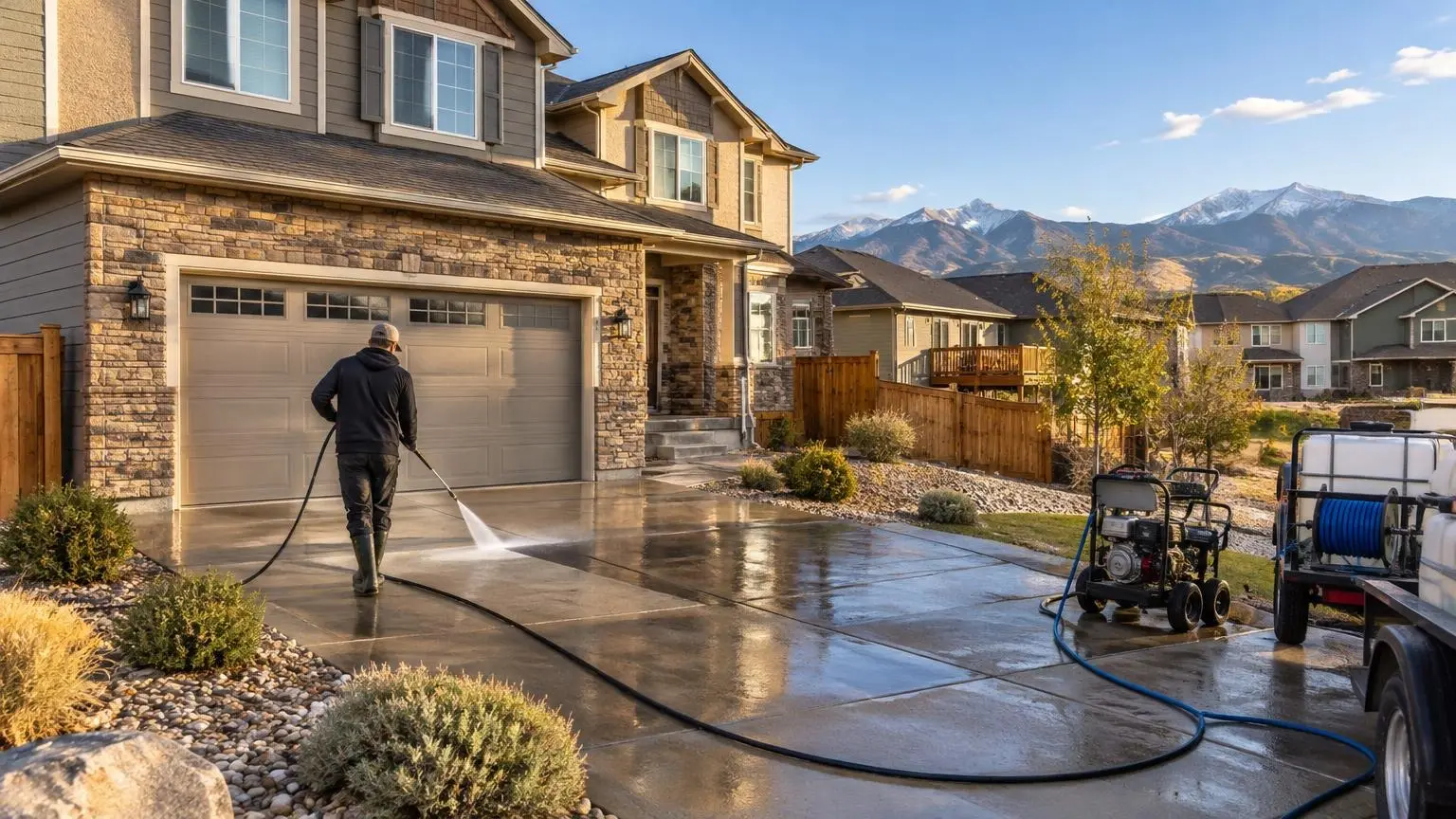
Pressure Washing in Denver means working in a city where rinse water has a short trip to a river. Denver's storm system collects runoff through almost 24,000 inlets and about 800 miles of storm main pipe, then releases it through more than 600 outfalls into Cherry Creek and the South Platte. The city points out that this runoff gets no treatment at a wastewater plant along the way. So before any water touches a driveway or storefront, we look at where it would run and plan around the nearest inlet.
Denver Water's drought rules come first
Denver Water declared a Stage 1 drought on March 25, 2026, and its Board added tighter measures in Resolution #002a-2026, effective October 1, 2026, until the Board acts again. As the resolution reads, individuals may not power wash except for immediate health or safety reasons. Commercial enterprises for which cleaning with water is an essential part of the business may power wash only as necessary, and they must clean without water first, use only high-efficiency equipment and make sure water is not wasted. Denver Water's drought FAQ also states that routine or cosmetic power washing is not permitted after September 30. For a Denver Water customer, that means a purely cosmetic house or driveway wash may not be allowed right now. How the rules apply to a specific property is Denver Water's call, so confirm with them if you are unsure.
What we can still help with
While the restrictions are in place, a Denver job is planned around the rules rather than around appearance alone:
- Gutter clean-outs and debris removal, done by hand without washing
- Dry sweeping, scraping and blowing off walks, patios and storefront entries before any water is considered
- Cleaning where there is an immediate health or safety reason, with the reason written into the quote so you can confirm it fits the rules
- Planning and quoting full exterior washes now so they can be scheduled once Denver Water lifts or eases the restrictions
Hail, sun and a dry climate
Denver sits at an official elevation of 5,280 feet and soaks up roughly 3,100 hours of sunshine a year, with most of its precipitation arriving between April and August. That mix is hard on exteriors. Strong UV chalks paint and fades vinyl, summer thunderstorms leave grit and torn leaves plastered to walls, and hail can leave siding, gutters and fences scuffed and grimy even when nothing is broken. When washing is permitted again, a gentle soft wash shows you what shape the surfaces are really in.
Rentals, duplexes and shared walls
Census numbers put Denver's owner-occupied rate at 48.8%, so a large share of homes here are rented. If you own or manage a rental, a duplex or a small apartment building, we can work around tenant schedules, list notice dates in the written quote and handle shared walkways and entries in sections so access stays open.
How we handle the water
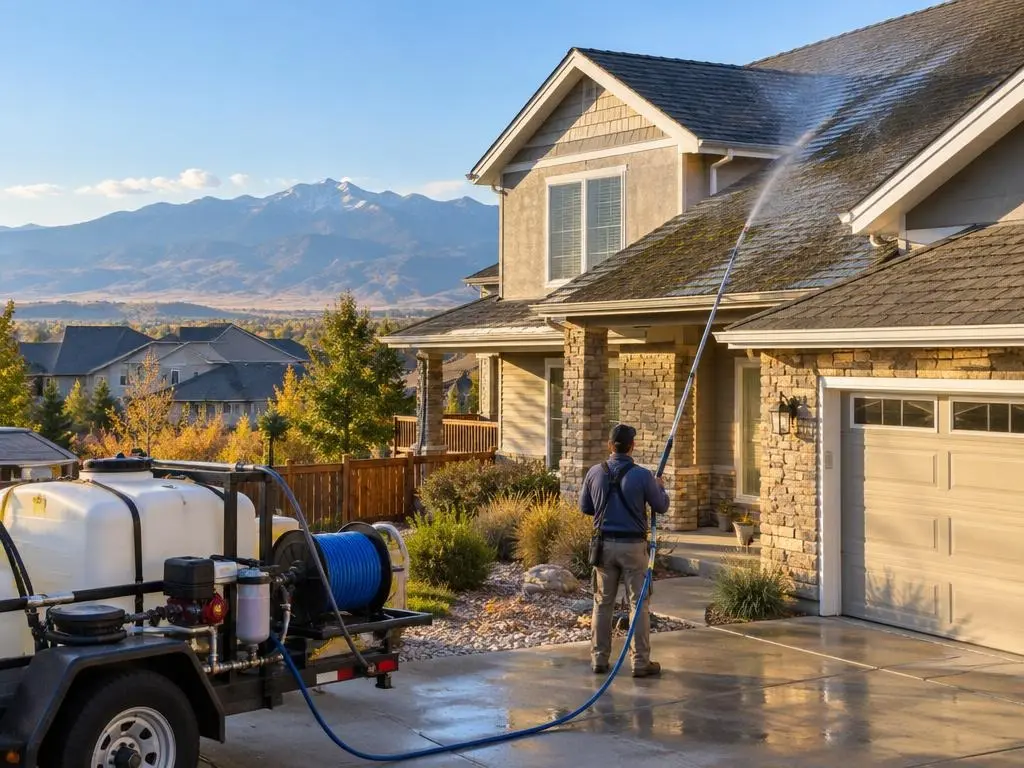
When water use is allowed, we keep pressure low on siding and roofs, cover plants, protect windows and keep wash water away from street inlets. Depending on the site, that can mean temporary inlet covers or berms, vacuuming up rinse water, or steering it onto turf or gravel to soak in. Stormwater requirements differ by property type and can change; the City and County of Denver is the authority to ask about a specific address.
Timing and quotes
Denver's average window for measurable snow runs from about October 17 to April 27, and washing needs surfaces and air above freezing. Early fall, after the summer hail and thunderstorm season, and mild stretches in spring are the easiest times for exterior cleaning, subject to whatever water-use rules are in effect then. Text us a few photos or call (720) 419-1995. We look at the surfaces, ask about access and your water provider, and put the scope and price in writing before any work starts.
Denver Conditions Worth Knowing
- Denver Water drought rules. Under Denver Water Board Resolution #002a-2026, effective October 1, 2026, until further Board action, power washing by individuals is allowed only for immediate health or safety reasons. Commercial enterprises for which cleaning with water is essential may power wash only as necessary, after cleaning without water, using high-efficiency equipment and avoiding water waste.
- Among the most hail-prone cities. A study of U.S. areas with at least 50,000 people ranked Denver 10th for hail storms, and three of the costliest hailstorms in U.S. history struck Denver: July 11, 1990; July 20, 2009; and May 8, 2017.
- Storm drains run straight to the river. Denver's separate storm sewer has almost 24,000 inlets, about 800 miles of storm main pipe and more than 600 outfalls to Cherry Creek and the South Platte. The city says anything besides rainfall and snowmelt going into a storm drain can be a pollutant, and pollutants that reach stormwater are called illicit discharges. It asks people to report suds in waterways during dry weather by calling 3-1-1.
- Mile High elevation, nearly half rented. Denver's official elevation is one mile, 5,280 feet, set by a benchmark on the State Capitol steps. About 48.8% of housing units are owner-occupied, with a median owner-occupied value of $616,000 (American Community Survey 5-year estimates, 2020 to 2024).
Denver Questions
Can I get my Denver house pressure washed during the drought restrictions?
If Denver Water is your provider, Resolution #002a-2026 limits power washing by individuals to immediate health or safety reasons, and commercial washing to what is necessary, after dry cleaning first and with high-efficiency equipment. A purely cosmetic wash may not qualify. We can go over the situation with you at the estimate, offer dry options such as gutter cleaning and debris removal, and quote a full wash for when the rules change. Denver Water has the final word on what is allowed.
Can you clean siding that took a beating in a hailstorm?
When washing is permitted, yes, as long as the siding is still intact. Soft washing lifts storm debris without forcing water into cracked or loose pieces. If we spot damage that looks like a repair or insurance matter, we point it out first so you can decide whether to have it inspected.
Where does the water go when you wash a Denver driveway?
Denver's storm drains carry runoff to Cherry Creek and the South Platte untreated, so we map out the runoff before starting. Depending on the lot, we use temporary inlet covers or berms, collect the water or send it to turf or a planted area. For questions about a particular property, the city's stormwater staff can be reached through 3-1-1.
Do you work on older brick homes?
Yes. Old brick and mortar can be soft, so we keep pressure low and test a small patch first. If mortar joints are already crumbling, we tell you before cleaning rather than risk making them worse.
Pressure Washing Near Denver
- Pressure Washing in Aurora, CO
- Pressure Washing in Centennial, CO
- Pressure Washing in Parker, CO
- Pressure Washing in Englewood, CO
- Pressure Washing in Greenwood Village, CO
- Pressure Washing in Littleton, CO
- Pressure Washing in Lone Tree, CO
- Pressure Washing in Highlands Ranch, CO
- Pressure Washing in Castle Rock, CO
- Pressure Washing in Castle Pines, CO
- Pressure Washing in Cherry Hills Village, CO
- Pressure Washing in Glendale, CO
- Pressure Washing in Foxfield, CO
- Pressure Washing in Commerce City, CO
- Pressure Washing in Brighton, CO
- Pressure Washing in Thornton, CO
- Pressure Washing in Northglenn, CO
- Pressure Washing in Westminster, CO
- Pressure Washing in Lakewood, CO
- Pressure Washing in Arvada, CO
- Pressure Washing in Wheat Ridge, CO
- Pressure Washing in Golden, CO
- Pressure Washing in Sheridan, CO
- Pressure Washing in Federal Heights, CO
- Pressure Washing in Broomfield, CO
- Pressure Washing in Bennett, CO
- Pressure Washing in Elizabeth, CO
- Pressure Washing in Ken Caryl, CO
- Pressure Washing in Columbine, CO